24/7 Emergency Roofing in Mableton, GA
24/7 Emergency 24/7 Emergency Roofing Available in Mableton, GA
Active roof leak or storm damage in Mableton, GA? Mableton Roofing Solutions offers 24/7 emergency tarping and repair. Call (770) 628-5517 now.
When you need emergency roofing services in Mableton, GA, every minute of delay means more water, more damage, and more cost — call Mableton Roofing Solutions right now at (770) 628-5517. Our 24/7 emergency line is answered around the clock, every day of the year, including weekends and holidays. We serve Mableton and the surrounding metro Atlanta area with emergency tarping, leak repair, storm damage response, and commercial roof emergencies.
Note on our business profile hours: our standard office hours are 7 AM–7 PM daily, but our emergency dispatch line operates 24 hours a day, 7 days a week. If you have an active leak or storm damage outside normal hours, call the number above and you will reach emergency dispatch, not voicemail.
What is emergency roofing and when do you need it?
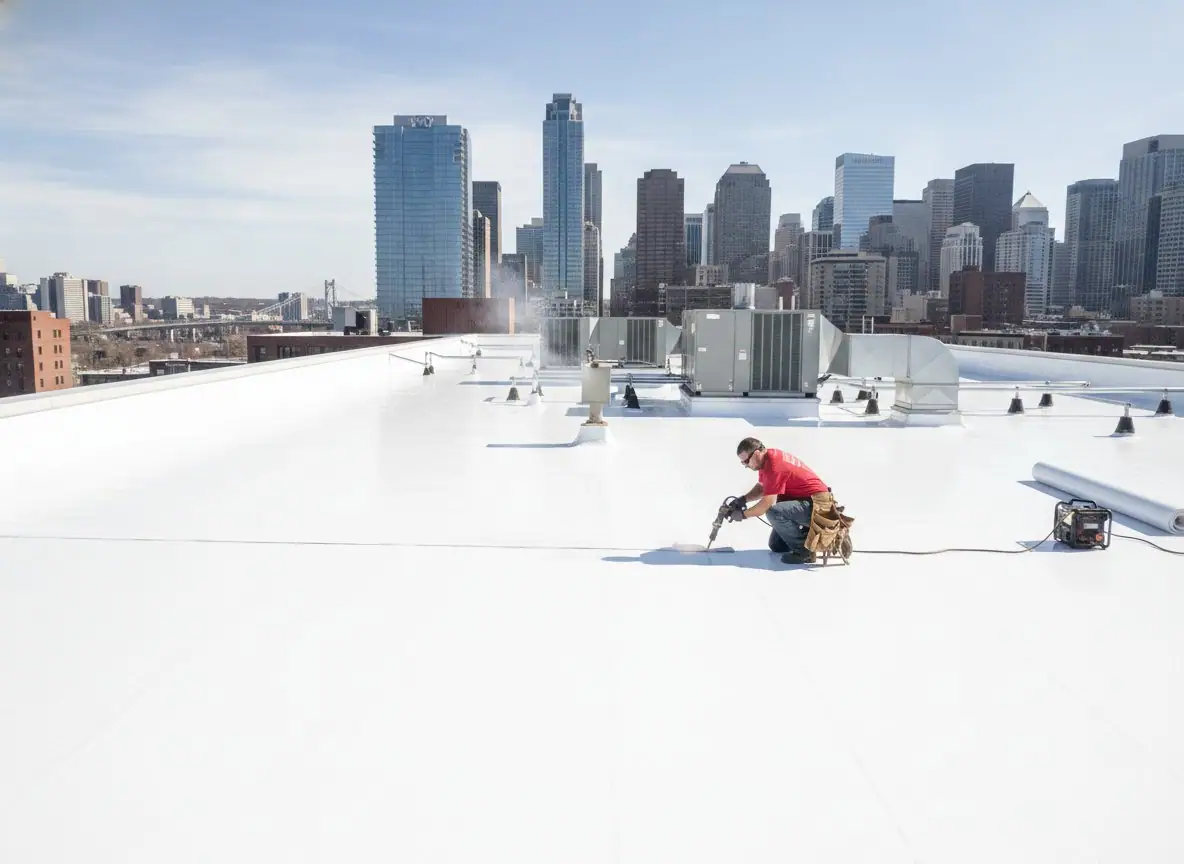
Emergency roofing is urgent, unscheduled repairs or protective measures taken when a roof failure poses an immediate threat to a building's structure, contents, or occupants. You need emergency roofing when any of the following is true: water is actively entering the building, a storm has displaced shingles or flashing, a tree or large branch has punctured or collapsed part of the roof, or high winds have lifted sections of membrane or decking. These situations cannot wait for a standard appointment. Mableton's position in the Georgia Piedmont means the area receives intense summer thunderstorms, occasional hail events, and periodic tropical remnants that can strike with little warning. Older housing stock in Mableton — including brick ranch homes and split-levels built in the 1960s through 1990s — often carries original roof decking that is more vulnerable to sudden failure when storms hit. If you are unsure whether your situation qualifies as an emergency, the safest rule is this: if water is moving, it is an emergency. Once the emergency is under control, you can see the full range of repair and replacement services we offer in Mableton. Understanding what qualifies as an emergency leads directly to knowing what to do in the first moments after one begins.
What should you do first when your roof is leaking?
Your first priority when a roof is leaking is personal safety — do not go onto the roof yourself during active rain, high winds, or if any structural collapse is visible. Follow this emergency steps checklist immediately:
- Get people and pets out of rooms directly below the leak. Wet ceilings can collapse without warning.
- Turn off electricity in affected rooms if water is near light fixtures, outlets, or the electrical panel.
- Place buckets and lay down plastic sheeting to protect flooring, furniture, and belongings.
- Move valuables, electronics, and documents away from the wet area.
- Photograph everything before you move anything — ceiling stains, water pooling, damaged belongings, and the exterior roof from the ground level.
- Call (770) 628-5517 to reach our 24/7 emergency dispatch.
- If safe to do so from inside the attic, place a bucket under the leak point and push insulation away from the wet area to prevent mold spread.
- Do not attempt to climb onto a wet or storm-damaged roof. Leave that to trained technicians with proper safety equipment.
Read moreShow less
Once your household is safe and you have documented the damage, the next practical question is how to slow or stop water entry until a technician arrives to begin permanent roof leak repair, which fixes the source of the leak rather than only holding back the water.
Free, no-obligation estimates
Talk to Mableton Roofing Solutions
Tell us what you need and we’ll take it from there.
How to stop a leaking roof during heavy rain?
The most effective way to slow a roof leak during heavy rain — from inside — is to relieve water pressure by carefully puncturing a sagging ceiling bubble at its lowest point and directing the flow into a bucket, which prevents a larger uncontrolled collapse. From outside, a temporary roof patch using heavy-duty polyethylene sheeting or a pre-cut emergency roof tarp can be applied over the damaged area if conditions allow safe access and the work can be done by trained personnel. Do not use roofing caulk or spray foam as a primary fix; they delay proper repair without addressing the underlying failure point. In Mableton's climate, afternoon storms can produce inches of rain in under an hour, so interior water management matters as much as exterior patching in the first hour of an emergency. The structured method for exterior water control — roof tarping — has a defined process that our crew follows on every emergency call.
How does emergency roof tarping work?
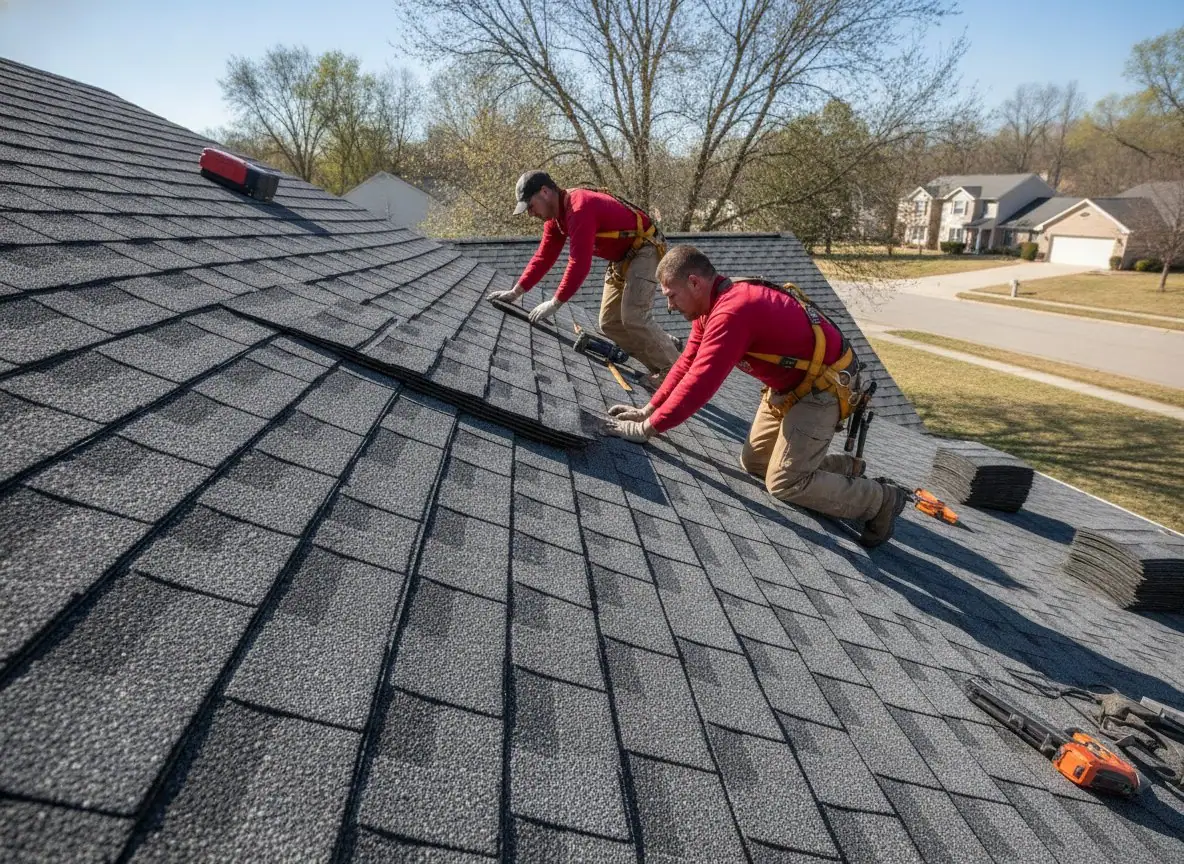
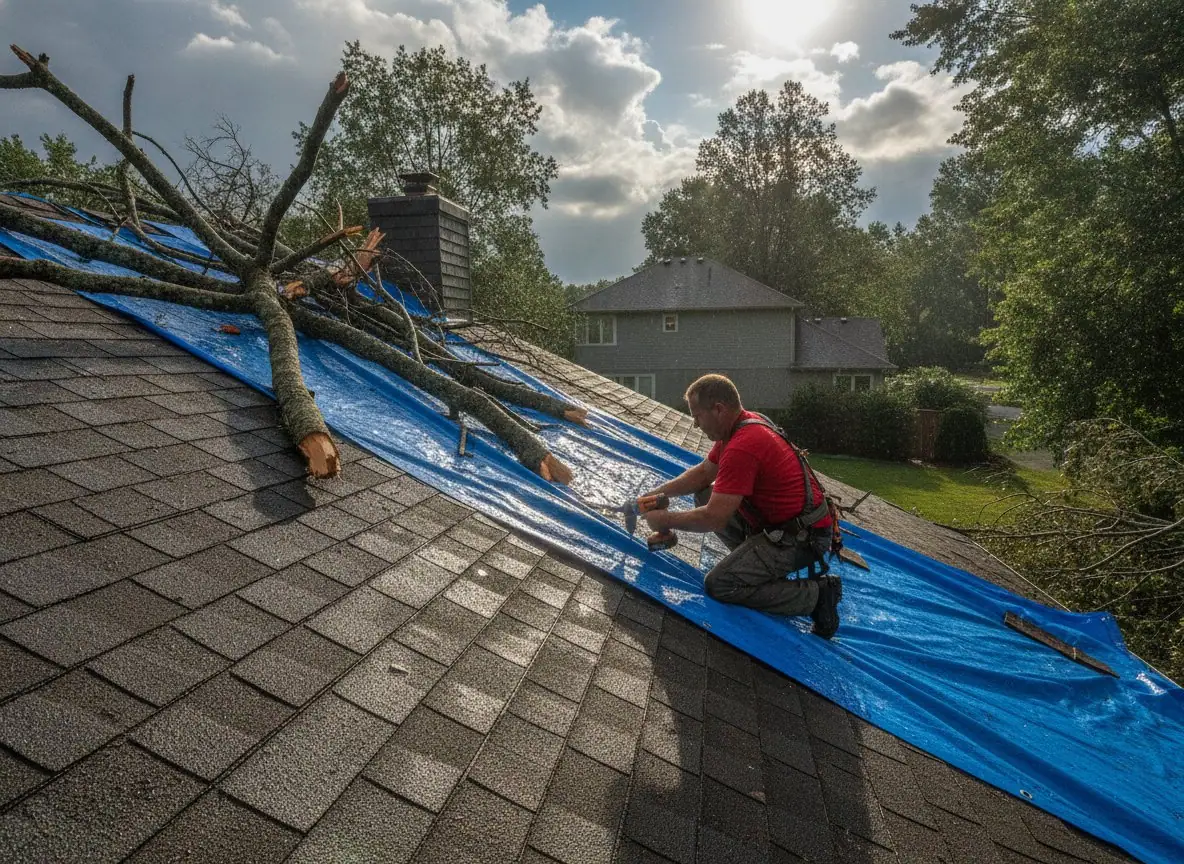
Emergency roof tarping places a waterproof polyethylene barrier over the damaged section of a roof to stop water entry until permanent repairs are possible. Here is the step-by-step process our trained technicians follow:
- Safety assessment: Technicians inspect the roof slope, structural condition, and any hazards (downed power lines, compromised decking) before stepping onto the surface.
- Damage identification: The full extent of the breach is located — this includes checking under shingles and flashing, not just the visible entry point, because water travels along decking before dripping through ceilings.
- Tarp sizing: A tarp is selected that extends at least 4 feet beyond the damaged area on all sides, including up and over the ridge when the damage is near the peak. Undersized tarps are a leading cause of secondary water entry.
- Anchoring: The tarp is secured with dimensional lumber (typically 2×4 boards) laid across the tarp and screwed or nailed through it into the roof decking — not simply weighted down, which fails in wind. This is the step most DIY attempts get wrong, and an improperly anchored tarp can cause additional damage in wind.
- Perimeter seal check: Edges are checked for gaps that could funnel water beneath the tarp.
- Documentation: We photograph the installed tarp for your claim file; for how the claims process leads into a full replacement, see our guide to insurance roof replacement.
Read moreShow less
An emergency roof tarp is a temporary measure — it protects the structure while conditions are assessed and replacement materials are sourced for permanent repair, and our roofing materials page explains the options. What happens if that permanent repair is delayed matters a great deal.
What happens if a roof leak is left untreated?
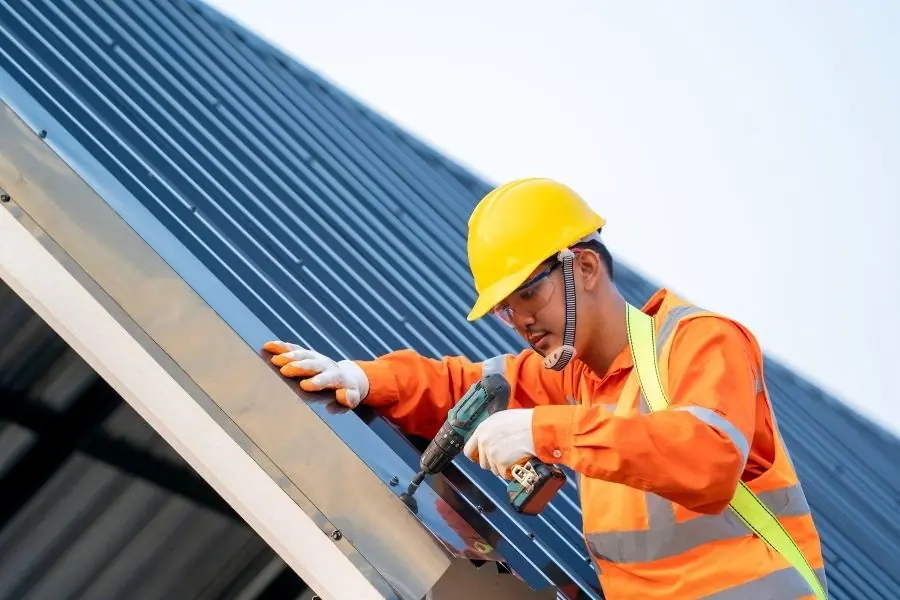
An untreated roof leak causes escalating damage that grows faster than most homeowners expect. Here are the documented consequences in roughly the order they occur:
- Attic insulation saturation — wet insulation loses R-value and becomes a moisture reservoir, often within hours.
- Roof decking rot — OSB and plywood decking begins to delaminate and soften within days of sustained moisture exposure.
- Mold and mildew growth — Mableton's warm, humid climate means mold can begin colonizing wet wood and drywall within 24–48 hours.
- Ceiling and drywall damage — drywall softens, stains, and eventually collapses under water weight.
- Structural framing damage — rafters and ceiling joists can begin to rot if moisture persists over weeks.
- Electrical hazards — water reaching wiring, junction boxes, or recessed lighting creates fire and shock risks.
- Interior finishes — flooring, cabinetry, and paint are damaged, compounding repair costs significantly.
- Insurance complications — insurers may reduce or deny claims when evidence shows a leak was known but not mitigated promptly.
Knowing these consequences also informs whether a partial repair is a valid option or whether a larger scope of work is needed.
Can you repair just a section of a roof?
Yes, a section of a roof can be repaired without replacing the entire roof, provided the surrounding field of shingles or membrane is in sound condition and the decking beneath is structurally intact. Partial or sectional repairs are appropriate when storm damage or failure is isolated, and storm damage roof repair is the service that covers this kind of targeted work — for example, a single field of shingles damaged by a fallen limb, or a section of flashing that has separated. Sectional repair is not advisable when the existing roof material is at or near the end of its service life, because new shingles will not match aged ones in color or wear, and surrounding materials may fail shortly after the repair. Our trained technicians assess the full roof during every emergency inspection and will tell you plainly whether a section repair is a sound investment or whether replacement is the more cost-effective path. The specific weather patterns in Mableton and the broader Atlanta region are a significant driver of which repair scope is needed.
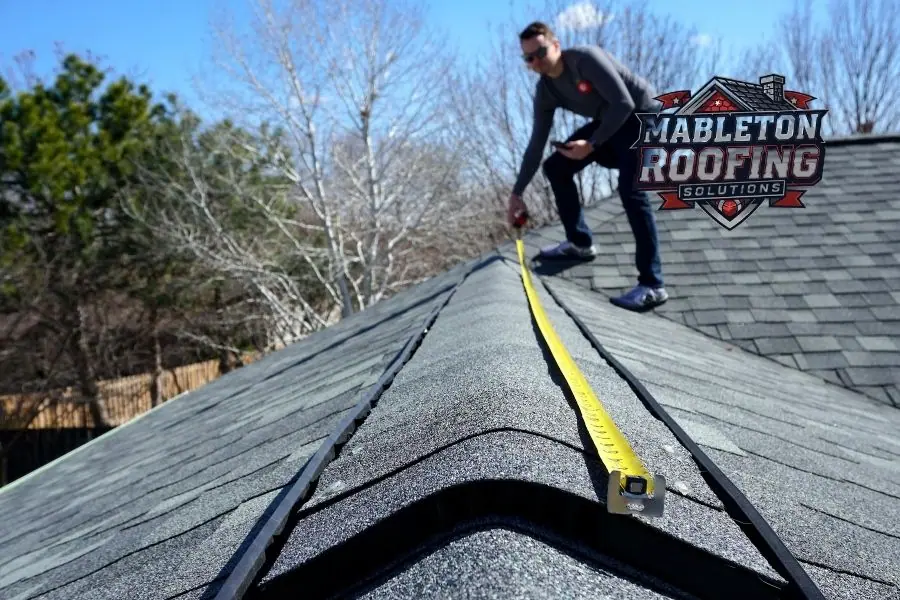
What causes roof emergencies in the Mableton area?
In Mableton, GA and the surrounding Cobb County area, the most common causes of roof emergencies are:
- Summer thunderstorms and microbursts — the Atlanta metro regularly records severe thunderstorm warnings between April and September, with straight-line winds capable of removing shingles or entire sections of roofing.
- Hail events — Georgia experiences hail damage across a range of sizes; even smaller hail can crack or bruise asphalt shingles and dent metal flashing, creating entry points for water.
- Fallen trees and limbs — Mableton's established neighborhoods have mature tree canopy, which increases the risk of impact damage during wind events.
- Tropical storm remnants — systems that move inland from the Gulf of Mexico frequently bring sustained rainfall and high winds to north Georgia.
- Deferred maintenance failures — cracked or curled shingles, corroded flashing, and clogged gutters that have gone unaddressed fail suddenly under storm stress.
- Ice and freeze events — while less common, Mableton does experience occasional winter ice storms; ice dams can form in valleys and around gutters, forcing water under shingles.
Understanding what caused the emergency shapes how quickly we can mobilize and what materials we bring to your property.
How fast can we get to you, and what is the emergency process?
When you call our 24/7 emergency line at (770) 628-5517, here is exactly what happens: dispatch answers your call, gathers your address and a brief description of the damage, and routes a crew. We serve Mableton and all surrounding communities listed in our service area. The emergency process from call to stabilization follows these stages:
- Call intake: You describe the situation; dispatch confirms your address and assesses whether immediate safety concerns (structural collapse risk, downed lines) require coordination with local emergency services first.
- Crew dispatch: A trained technician team is routed to your property.
- Arrival and assessment: Technicians perform a safety check of the roof and structure before accessing the damaged area.
- Emergency stabilization: Tarping, temporary patching, or debris removal is performed to stop active water entry.
- Damage documentation: We photograph all damage from multiple angles for your insurance claim file.
- Written estimate: After the free inspection, we provide a written quote for permanent repairs. No work beyond emergency stabilization begins without your authorization.
- Insurance coordination: We work with you and your insurer to support the claims process.
Our service area for emergency response covers Mableton, Atlanta, Smyrna, Marietta, Vinings, Austell, East Point, College Park, Douglasville, Sandy Springs, Lithia Springs, and Powder Springs.
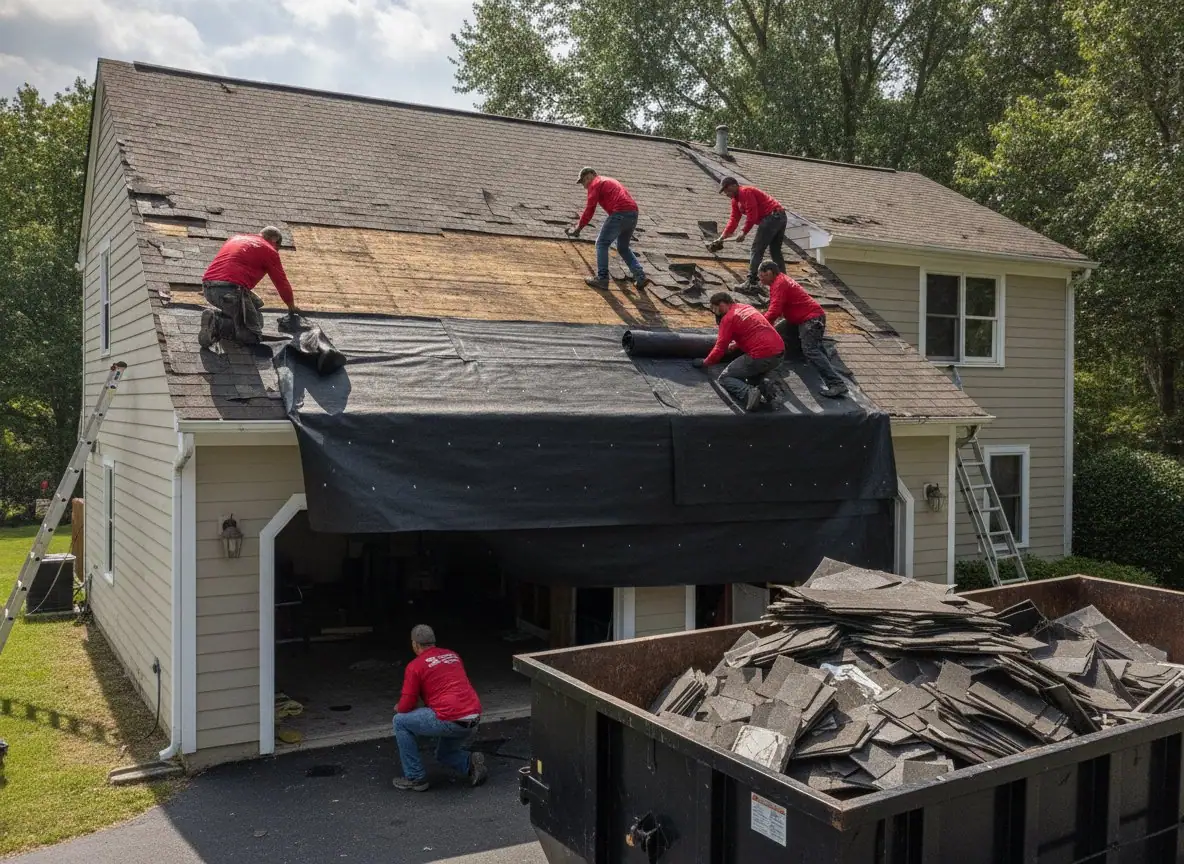
At a glance
What's the average cost to fix a leaky roof, and do plumbers fix leaks in the roof?
Plumbers do not fix roof leaks — roof leaks are the domain of licensed roofing contractors, while plumbers address leaks in pipes, water supply lines, and drain systems inside the building. If water is entering from above the ceiling line and is not tied to a pipe failure, the source is almost always the roof or its associated components (flashing, gutters, skylights). As for cost: we do not publish price ranges because every job is different. To see what the work involves once the emergency is contained, visit our roof repair page. Here are the factors that determine what emergency repair costs:
| Cost Factor | Why It Matters |
|---|---|
| Extent of damage | A single missing shingle requires far less labor and material than a 200 sq ft section of compromised decking. |
| Roof pitch and access | Steeper roofs require additional safety equipment and slower work pace, increasing labor time. |
| Material type | Asphalt shingles, metal panels, modified bitumen, and TPO membrane each carry different material costs and installation requirements. |
| Decking condition | Rotted or delaminated decking must be replaced before new surface material is applied, adding scope. |
| Tear-off requirement | If existing layers must be removed before repair, disposal costs are added. |
| Emergency timing | After-hours or weekend dispatch may carry a premium versus standard business hours scheduling. |
| Permit requirements | Cobb County may require permits for certain scopes of work; permit fees vary by project size. |
We provide a free inspection and written quote before any permanent repair work begins, and you can contact our roofers to request one. Financing is available for qualifying projects. The cost picture becomes clearer once you know what your insurance policy will cover.
Will insurance cover emergency roof repairs?
Most standard homeowners insurance policies cover sudden and accidental roof damage caused by storms, hail, wind, fallen trees, and similar events — but they typically exclude damage resulting from lack of maintenance or gradual deterioration. Emergency tarping is generally covered as a mitigation measure when it prevents further covered damage. Here is the documentation checklist we recommend you build from the moment damage occurs:
- Photographs of the exterior roof damage from the ground (taken immediately after the event)
- Photographs of interior water entry points — ceiling stains, wet insulation, pooling water
- Photographs of any damaged personal property in the affected area
- Video walkthrough of all affected areas, with date and time metadata visible
- Notes on the date and time the damage was first discovered
- Local weather records or storm reports for the event date (available from the National Weather Service)
- Your insurance policy declarations page and claim number once filed
- All contractor estimates and invoices, including the emergency tarping invoice
- Any correspondence with your insurance adjuster (keep written records of phone calls)
Mableton Roofing Solutions works with homeowners throughout the insurance claims process. We document damage thoroughly on your behalf and can provide the written estimates and photo evidence that adjusters require.
How do you call our 24/7 emergency roofers?
Call (770) 628-5517 right now — that number reaches our 24/7 emergency dispatch line. Have your address ready and be prepared to describe what you are seeing: active drip, ceiling stain, visible hole, storm damage, or fallen tree. Our team will guide you through immediate safety steps while a crew is routed to your location.
Mableton Roofing Solutions
513 Veterans Memorial Hwy SW
Mableton, GA 30126
Phone: (770) 628-5517
Emergency dispatch: 24 hours a day, 7 days a week
We provide emergency roofing services across our full service area:
- Mableton, GA
- Atlanta, GA
- Smyrna, GA
- Marietta, GA
- Vinings, GA
- Austell, GA
- East Point, GA
- College Park, GA
- Douglasville, GA
- Sandy Springs, GA
- Lithia Springs, GA
- Powder Springs, GA
Read moreShow less
For non-emergency roof concerns, our related service pages on storm damage repair and roof leak repair give more detail on the permanent repair process, and a storm damage roof inspection shows what to expect from a full inspection.
FAQ
FAQ
What is the cheapest month for roofing?
Late fall and winter — typically November through February — tend to have lower demand for roofing work in the Atlanta and Mableton area, which can mean shorter scheduling lead times and, in some cases, more competitive pricing from contractors. However, emergency repairs cannot be timed around market conditions; they must happen when damage occurs. For planned replacement or non-urgent repair, scheduling during the off-peak season is a reasonable strategy.
Is a roof tarp a permanent fix?
No. An emergency roof tarp is a temporary protective measure, not a permanent repair. Tarps degrade under UV exposure and are not designed to withstand an extended Georgia storm season. A properly installed tarp buys time — typically weeks, not months — for permanent repairs to be scheduled and completed. Leaving a tarp in place beyond its useful life risks secondary water entry and can complicate an insurance claim if an adjuster determines that permanent mitigation was unreasonably delayed.
Does homeowners insurance cover storm damage emergencies?
Most standard homeowners insurance policies cover sudden storm-related roof damage, including the cost of emergency tarping as a mitigation measure. Coverage depends on your specific policy terms, your deductible, and whether the damage is classified as sudden and accidental versus gradual deterioration. Document everything immediately and file your claim promptly — most policies require timely reporting after a loss event. We help homeowners in Mableton and the surrounding area navigate the claims process and provide the documentation insurers require.
What should I photograph for my insurance claim?
Photograph the exterior roof damage from the ground as soon as it is safe to do so. Also photograph all interior entry points — ceiling stains, pooling water, wet insulation visible from the attic, and any damaged belongings. Capture wide shots showing context as well as close-ups showing detail. Record a date-stamped video walkthrough of all affected spaces. Save local weather service reports for the event date. Keep copies of all contractor estimates and invoices. The more documentation you have from immediately after the event, the stronger your claim file will be.
Do you serve Atlanta, Smyrna, and Marietta for emergencies?
Yes. Mableton Roofing Solutions provides 24/7 emergency roofing services throughout our full service area, which includes Atlanta, Smyrna, and Marietta, as well as Vinings, Austell, East Point, College Park, Douglasville, Sandy Springs, Lithia Springs, and Powder Springs. If you are in any of these communities and have an active leak or storm damage, call (770) 628-5517 now.
Do you handle emergency commercial roof repairs?
Yes. We provide emergency commercial roof repair for flat roofs, low-slope systems, modified bitumen, and TPO membrane systems, in addition to residential emergency services. Commercial roof failures — especially on flat roofs common in Mableton and greater Atlanta — can result in rapid water infiltration across large floor areas, threatening inventory, equipment, and operations. Call our 24/7 line at (770) 628-5517 to dispatch a crew trained in commercial roofing systems; our commercial roofing page covers those services in more detail.
If you have an active leak, storm damage, or any roof emergency in Mableton, GA, do not wait. Call Mableton Roofing Solutions at (770) 628-5517 for a free inspection and immediate emergency response — 24 hours a day, 7 days a week.
Why choose us
Why choose Mableton Roofing Solutions?
Free estimates
Get a clear, no-obligation estimate before any work begins.
Licensed & insured
Your property and our crew are protected on every project.
Residential & commercial
One team for homes, multi-family and commercial properties.
Locally owned & operated
A local team serving your community and the surrounding area.
Get in touch
Find roofing help near you
Request a free estimate online or give us a call — our team will follow up quickly.
- Call us(770) 628-5517
- Visit513 Veterans Memorial Hwy SW, Mableton, GA 30126
- HoursMon-Sun: 7:00 am – 7:00 pm